
Japan is a very popular travel destination, but for those of us in the Western hemisphere it can be daunting to plan a trip to somewhere so far away. Especially if you experience environmental sensitivities!
I finally got a chance to go to Japan in June 2026, and it was so incredible on many levels! There are many locations with a very harmonious energy, such as various temples, gardens, and natural areas. All the hotels I stayed at ended up being very clean and well-maintained.
In this post, I summarize my experiences traveling in Japan as an environmentally perceptive person (who has recovered from environmental illness). When planning travel, I pre-screen hotels using Home Harmony Assessment to have the best chance of clean environments during my trip.
I include notes on airports, hotels, and any noteworthy locations with strong harmonious energy. I have indicated whether hotels were ones I personally vetted in advance (for solo travel days), or were ones I happened to stay at when traveling with a group tour.
If you’re planning a trip to Japan, I hope you find this post helpful! If you want to visit any other cities/locations, I am happy to help you with Location Assessments so your trip has the best chance of going smoothly.
Disclaimer: Any comments regarding hotels or locations are from my own intuitive assessment and do not represent any formal claims regarding any given establishment, nor do they represent formal building inspection results.
Tokyo
Tokyo is the capital city of Japan and the point of entry for international travelers. Even for a capital city, there are many amazing locations here that feel great!
Airport
I flew into and out of Haneda Airport (HND). It was fairly clean. There are some isolated areas that felt a bit moldy, but these were mainly passageways and not places you’d spend a lot of time standing or waiting.
Chemicals/fragrance were present in moderate to moderately low levels, fairly typical for an airport. EMF was about average for an airport as well.
Subway
I went through many stations of the Tokyo rail during my travels, and did not notice any of them to be moldy or to have a sewage smell. They were fairly clean, overall.
Keep in mind, during peak times, the subway cars can be extremely crowded (standing room only).
Hotel
I stayed at the The Gate Hotel Kaminarimon by Hulic.
Looking at the satellite map of Tokyo, I noticed the energy in the eastern districts seemed more harmonious compared to the western districts such as Shinjuku (which is known for its nightlife).
Of the many hotels in eastern Tokyo, the Gate Hotel particularly stood out to me for clean and harmonious based on my intuitive Location Assessment.
In my room there was no perceivable mold. I detected trace levels of chemicals/fragrance. As far as hotels go, this is pretty good! Compared to many neighborhoods and buildings in Tokyo, the EMFs here felt lower than average.
From the hotel balcony there is a beautiful view of part of Tokyo, including the Sumida district.

It is very easy to travel around Tokyo via the rail system. The closest rail station, Asakusa station, is a 5-minute walk from the hotel.
Noteworthy locations
In general, many of the historic temples and shrines in Tokyo have a nice energy. However, a few stuck out.
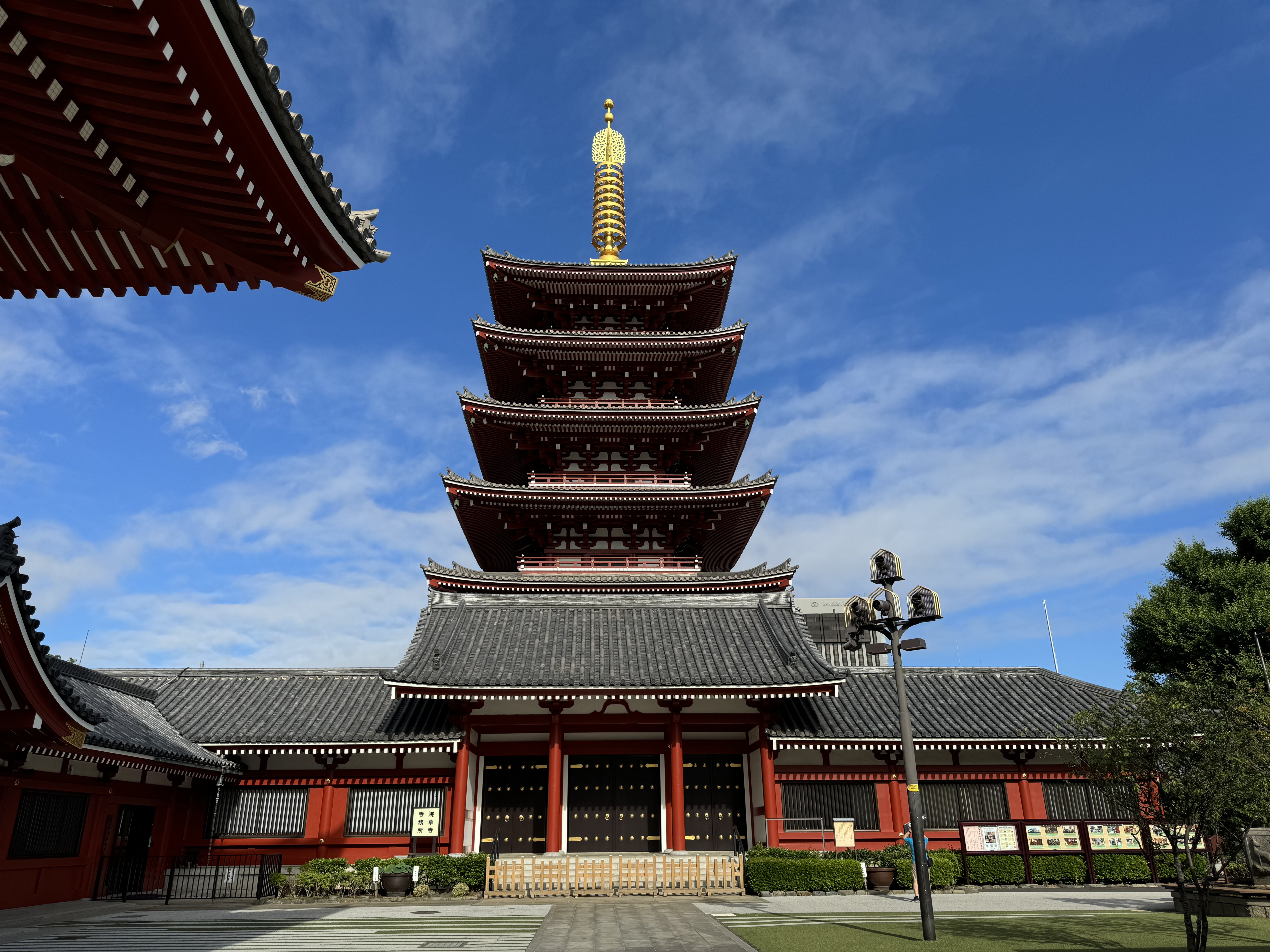
The Kamanarimon gate is just a several minute walk from The Gate Hotel (hence the hotel name). This famous gate leads into the Sensōji Temple, a famous Buddhist temple in the Asakusa district.


The energy here felt very harmonious, and I spent a lot of time meditating here in the first couple of days to overcome jet lag. It was very convenient to have this location be just a short walk from the hotel!
Meiji Jingu Shrine is a Shinto shrine in the Shibuya district. The energy here felt very powerful as well. There are many famous features here, including The Married Camphor Trees (Meoto Kusu). These are two sacred camphor trees connected by a rope. They symbolize love, marriage, and family, and many people of all sorts of spiritual/religious backgrounds come here to pray to them.
There is also a gorgeous iris garden! In general, I perceived that many Japanese gardens seem to have lower levels of herbicides and pesticides than those in the USA.

Hibiya Park in Chiyoda ward had a very relaxing energy. Many local businesspeople and employees came here during their breaks to rest. There is a 400-year-old Ginkgo tree (the Kubikake Ginkgo) whose energy felt very powerful to me.

The Hamarikyu Gardens are very lovely, with a peaceful and relaxing energy. I had a nice 30-minute nap here (it was day 2 of the trip) that finally reset my body clock to the 13 hour time difference. If you like matcha, the matcha sold at the gardens’ cafe is extremely high quality.

Sumida Aquarium is in the Tokyo Skytree mall. It features several large display aquascape aquariums. Each aquarium is a mini ecosystem, with lush plant life and diverse fish communities. The energy of these aquariums felt extremely powerful to me, so much that I ended up coming here twice! Standing in the room amongst the aquariums had a very calming effect.

Further in the aquarium building, there are some penguins that are very cute, and somehow the aquarium manages to prevent any smell from the penguins building up. Overall the aquarium was very clean, and I didn’t perceive mold or chemicals/fragrance.
Niigata City
Niigata City is the capital of Niigata prefecture. The area is famous for its rice (popular worldwide as sushi rice) in addition to beautiful mountain landscapes. In the winter it is a popular area for skiing.
Airport
I arrived at Niigata by train from Tokyo, and later departed Niigata through Niigata Airport (KIJ/RJSN). It was quite clean. Chemicals/fragrance were present in only low levels. EMF felt less than typical for an airport, perhaps because this is a smaller domestic airport.
I discovered the airport only opens to passengers at 6:30am, so please keep this in mind if you have an early flight!
Hotels
I came to Niigata as part of a group tour, so I did not screen these first two hotels in advance. However, they both ended up being quite good.
Hotel Nikko Niigata was very clean. I did not detect any mold, and chemicals/fragrance were present in low levels. EMF felt rather low for a hotel.
The top floor has a very beautiful of Niigata City, where I watched the sunset. The breakfast buffet at this hotel was quite excellent!

Koshinosato was ranked the top hotel in all of Japan at the time of my visit. It is about 30 minutes outside of Niigata City. The room was exceptionally clean, with no perceivable mold, minimal chemicals/fragrance, and lower than average EMF.

Each room has a private onsen (hot spring) which was another very nice feature. Most hotels in Japan that have onsen have shared onsen (split by gender). With so many people going through it can feel a bit… dirty. The private onsen was very clean and relaxing, with a beautiful view of mountains in the distance.

The breakfast buffet here was great as well!
For my final night in Niigata, I stayed at the Niigata Grand Hotel. I chose this one before my trip after looking through most of the hotels in downtown Niigata City, and picked the Grand Hotel as it looked the most harmonious. I wanted to stay downtown as I had an early morning flight at Niigata airport the next day.

The room was clean, with no perceivable mold. Chemicals/fragrance were present at low levels. EMF was about average for a hotel in a dense downtown area.
The outdoors nearby had low level cyanobacteria and other outdoor biotoxins, which is not bad for a dense city area like this.
Noteworthy locations
Fusaiji Temple in Murakami City had a very beautiful zen garden. We visited as part of the group tour and did a zen meditation in the temple. The energy here is overall quite serene, and the temple building is very clean.

Sado Island
Sado Island is the largest island in the Sea of Japan. Located near Niigata, it is famous for its natural scenery, its rice (with a uniquely delicate flavor and texture), and as a home to the endangered crested ibis.
Ferry stations
Sado Island is only accessible via ferry from Niigata City. The ferry stations on both signs were not moldy. Chemicals/fragrance were present in low/levels, and EMF was about average for a public building.
I rode the Jetfoil boat both to and from the island. This was not moldy, and only had low level chemicals/fragrance.
Hotel
As part of the group tour, I stayed at the Hotel Oosado for several nights. This hotel felt very luxurious, with beautiful gardens, a nice lobby (including piano concerts and dance performances on some evenings), and communal onsens. Even though the onsens were shared (based on gender), they felt fairly clean vs other hotels’ onsens that I looked at pictures of before my trip.

The room was very clean. I sensed no appreciable mold, trace chemicals/fragrance, and lower than average EMF. The breakfast buffet was delicious and had some unique items specific to Sado Island.

Noteworthy locations
My group’s activities on Sado Island primarily centered around hiking.
Onogame is one of the most famous destinations on the island. It is a monolith on the coast of the island. We were there in June, when the Tobishima daylilies have their annual bloom. The air was very fresh, between all the plants and the sea air. I did not perceive any outdoor biotoxins such as cyanobacteria.

We also trekked the Osado Ishina Cedar Forest. There are many beautiful cedar forests on Sado Island, though this one may take a guide to get to, as the entrance was a bit far from any major road. The cedars have unique shapes from the island winds and heavy winter snowfall (up to 2 meters!), and their energy felt very powerful and restorative.

The Sado Island Gold Mine is a UNESCO world heritage site. Despite being damp, the air in the tunnels felt very cool, crisp, and fresh. This is a great destination for those interested in history, and there are some beautiful natural scenes as well.

Sapporo
Sapporo is the capital city of Hokkaido prefecture, the northernmost prefecture in Japan. Hokkaido is very popular for winter sports including skiing.
Airport
I flew in and out of Sapporo through New Chitose Airport (CTS). It was relatively clean. Overall it was not moldy, though there were isolated parts of the baggage claim area that may have had localized areas of low level mold growth (from the ceiling).
Chemicals/fragrance were present in low levels. EMF was still lower than typical for an airport, though felt higher than at Niigata airport.
Transit
I took the public buses several times, including from the airport to Sapporo Station. The various wings of Sapporo station I went to were not moldy, and had only low level chemicals/fragrance. EMF is about average for a dense city. There are very convenient luggage storage lockers.
The buses I took were clean, without any appreciable mold, and low to moderately low level chemicals/fragrance.
I also went through some of the train stations and trains which were similar to the buses and bus stations in terms of air and environment.
I took a lot of taxis in Sapporo, booking through the GO taxi app. This app functions a bit like Uber/Lyft in the US and other Western countries, though it connects you to professional taxi drivers instead of freelance drivers.
Compared to taxis and rideshare vehicles in the US, the Japanese taxis were much lower in chemicals/fragrance. I didn’t encounter any moldy ones, though I’ve never encountered any moldy Rideshare vehicles in the US either (surprisingly).
Hotel
I was a solo traveler in Sapporo, and chose the Shogetsu Grand Hotel. It’s about a 50 minute drive from the main Sapporo City, but the energy looked amazing during my Location Assessment process while planning my trip.

It did not disappoint. The energy there was very relaxing and invigorating. I had wanted to stay somewhere with an onsen, and the onsen here looked very clean in photos. It ended up being as clean as I’d hoped.
I noticed during my screening process that many shared onsen build up contamination with various toxins from all the people sweating and detoxifying in them, so I was very picky in choosing this hotel.
Noteworthy locations
AOAO Sapporo is an aquarium in downtown Sapporo. There are relaxing aquarium displays, including a large penguin tank. There’s a cafe with tables next to the penguins, so you can sip or get some work done while admiring the penguins. Again, the air was much cleaner than expected for a building with so many penguins.

The Mikasa City Museum takes about 2 hours to get to from Sapporo via transit or taxi. It contains what I would consider the finest public collection of ammonite fossils in the world.

Natural substances including crystals and minerals have unique energies to them, especially if there are many in one place or if they are very large. In my opinion, the energy associated with these fossils was very powerful, and I felt amazing while there.

Behind the museum is a lovely nature trail that was fairly clean, though parts did have up to low levels of cyanobacteria.
Leave a Reply